Mammy, The Mule and Equally Yoked: Black Women as Beasts of Burden

Mammy, The Mule and Equally Yoked: Black Women as Beasts of Burden

Celebrating the myth of the Strong Black Woman has mistakenly become an aspiration and an inspiration to those in certain demographics of the Black Community. When things are down and out and a black woman is tired, or fed the fuck up, someone, somewhere will remind her that this disgusting and frustrating existence is merely a test of her ability to survive when life is clearly giving her signals that she should make changes.

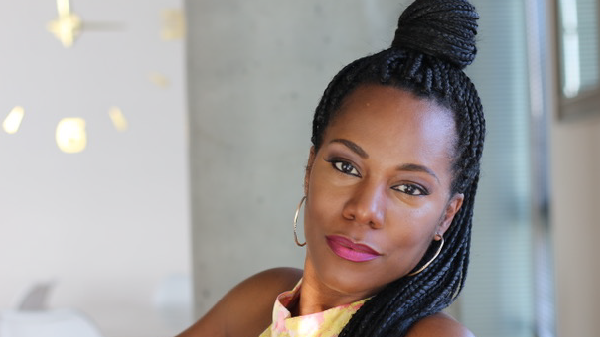
Author : Tracy Renee Jones

Author's Website | Articles from

http://www.beyondblackwhite.com/goddess-of-the-week-tracy-renee-jones-too-fly/

The mule possesses the even temper, patience, endurance and sure-footedness of the donkey, and the vigor, strength and courage of the horse. Operators of working animals generally find mules preferable to horses: mules show more patience under the pressure of heavy weights, and their skin is harder and less sensitive than that of horses, rendering them more capable of resisting sun and rain. Wikipedia

Celebrating the myth of the Strong Black Woman has mistakenly become an aspiration and an inspiration to those in certain demographics of the Black Community. When things are down and out and a black woman is tired, or fed the fuck up, someone, somewhere will remind her that this disgusting and frustrating existence is merely a test of her ability to survive when life is clearly giving her signals that she should make changes.

In recent conversation with a not so suitable suitor, I was accused of being a SBW, I recoiled as if I was slapped. I immediately explained that I am not a Strong Black Woman, and not only that, but that I take offense to being called what I equate to be a visual reference to a beast of burden.

Often times, when a woman becomes frustrated and overwhelmed, rather than offer assistance, there are those around ready to remind her that she is capable of withstanding walking through Hell with gasoline undies on, and I am quick to point out…..I am no mule.

Strong? Yes.

Mule? No.

Others seems very comfortable with subjecting Black women to more than their share of cruelty, disregard and inhumane treatment while patting her on the head as a reward for not kneeling over dead in exhaustion or delirium. Reverence for the Strong Black Woman has great PR; we love that she shows up, it makes everyone else’s life so much easier.

I refuse to be responsible for the continued abuse and invisible presence suffered by Black women because some refuse to be honest enough to express our collective frustration and individual pain.

Many Black women neglect to instill boundaries and communicate their limitations even after they find themselves under a boulder of problems.

Someone please dial 911…..

How did Black woman become synonymous with a hybrid horse and donkey? Her transformation from silent folks lore hero into a a modern day superhero is directly based on the White women’s position as ‘all that is good and delicate in the normal world’.

In the totem pole of racism, Jim Crow and good ol’ fashioned patriarchy, Black Barbie doesn’t get to have a Ken doll to call her very own. And that’s just too dam bad for Black Barbie!

Consider this, White women were so delicate and important (for babies, sex and domestic purposes) that it became necessary to formulate (read: imposed upon) laws and societal rules, which were created by White men, in order to protect (control) her.

In exchange for his protection and  her domestic value, the White woman then became his ideal possession.

This line of thinking implies that Black women, as the White woman’s opposite, require no such consideration, assistance or help from White males.

White men did not believe they needed to extend this perception of feminine value towards Black women because the respectful treatment of Black woman had no direct baring on White men in general.

The Black woman is his possession in a different way, she is his thing purchased and do his bidding, there’s no need for implied respect or concern.

Slavery made it quite easy to remove the Black man’s capacity to protect Black women and in time, White mistreatment of Black women’s minds, bodies and spirits was silently accepted with the persuasive crack of a bullwhip.

It is what it was.

Oppression, racism, sexism, and poverty has continued to beckon the Black woman (and now Latino/Asian WOC) back into the White man’s home to work, leaving her own family to fend for themselves. White men and Black women have a very long history of his ability to influence her personal space (how she comes and goes) and family dynamics (raped and giving birth to the boss’s child).

The Black man, not so much.

Patriarchy created the space for White men to mentally create, and re-create his two unique objects of affection, Black women in servitude projected to fulfill his own devoted mother fantasies and his White female counterpart. Through use of Black woman, who he pretends tirelessly gave and gave of herself without asking for anything in return, he satisfied his need for power and control.

Were it not for a White man providing for her, where would she be? For whatever reason, her racial counterpart has been missing for decades and she’s been doing what she’s doing by herself.

So now what?

“De nigger woman is de mule uh de world so fur as Ah can see.” Their Eyes Were Watching God-Zora Neale Hurston.

Source

Published at the tail-end of the Harlem Renaissance, Hurston’s famously unpretentious novel is a story of a young black woman’s search for love, spiritual liberation, physical satisfaction, and a way to defy the seemingly immutable laws of gender and race.  As her protagonist resists others’ attempts to script her life on their own selfish terms, Hurston invokes the symbol of the mule to characterize black women’s precarious condition in the United States: she is “worked tuh death,” “ruint wid mistreatment,” yet strong enough to carry impossible “loads” nobody else wants to “tote.”

Nobody wants to be a Black Woman and nobody appreciates Black women but society needs her in order to continue to live at the comfort level that society has enjoyed since the first slave ships hit the shore.

This position of martyr is what causes some Black women to mistake the moniker as something to aspire to, rather than something to run the Hell away from. The desire some women have to pile further strife into their lives is a subconscious way of distracting herself from her own needs and wants, because she thinks her wants and needs will not be met.

The selflessness of the mule role is also a way for her to feel better about herself.

Black women are the darlings of the Western world’s love/hate relationship with power and control no matter the color or the race of the men involved. Being a Strong Black Woman is directly related to the either the (imagined or real) perceived weakness of Black men.

n 1979, almost two decades after Hurston’s death, the black feminist thinker Michele Wallace created a firestorm of controversy when her Black Macho and the Myth of the Superwoman caustically exposed the dynamics of misogyny in the black power movement and deconstructed the mythology of the strong black woman image.  By examining its historical origins, its functions over time, and its harmful psychic and physical impact on black women, Wallace brazenly asserted that “strength” was a pernicious stereotype that had resulted in a conspiracy of silence about black women’s disenfranchisement and exploitation, within both black communities and the larger white-supremacist society.  Like Hurston, Wallace became a victim of vitriolic backlash from black men and women who accused her of disloyalty to the black community.

This ‘strength’ comes with the unspoken rule that those considered strong, such a SBW, shouldn’t complain. Those considered strong, like these certain Black women, don’t complain. A complaint would indicate that someone, somewhere, is causing her a problem.

By implying that Black women are capable, we take away her option of allowing herself to be incapable, or unwilling to carry extreme burden. By removing her ability to complain about her circumstances, we convince ourselves that she’s actually happy going about the daily business of suffrage.

As with anything else, her silence condones the abuse.

Behind the Mask of the Strong Black Woman makes similar points about the historical antecedents of what Beauboeuf-Lafontant calls present-day “mammification.” “Although no longer limited to domestic service, employed Black women too often are treated as modern-day mammies, prized for their fortitude, caring, selflessness, and seeming acceptance of their subordination.” Assumptions about black womanhood, she argues, began with slavery, as black women were viewed as the antithesis of white women to justify harsh labor, brutal whippings, and rape.  Some of those old assumptions have since been embraced and given redeeming qualities by blacks themselves.

I’ll even go as far as to say that some Black women not only behave, but also dress, the part of Mammie when employed. They appear as matronly, dowdy and awkwardly conservative while their non-Black counterparts appear more feminine. And it is this femininity, or loss thereof, that additionally adds to the perception that Black women aren’t ‘real women’.

For both writers, black women are culpable, as they invest in the appearance of invulnerability.  They wear masks, live lies, keep up appearances, perform superhuman tasks, and take care of everybody else, while sacrificing their own feelings and needs, to the detriment of their health.  While women of other groups are also caretakers, for black women, strength too often has meant taking care of other families in addition to, or instead of, their own.

The historic professional track of Black women as caretaker is influenced by her former position as a domestic slave to the White family. With the house and cooking tended to, all White wives, who had husbands who could afford ‘hired help’, were left to do was to cater to their husbands or enjoy their children.

With the Black woman out of the house during the day, and up until early evenings, her own home and family were often neglected until she made her way home to a waiting house, husband and children that expected and required her to do what she’s been doing all day for pay…for free.

If she has a husband, she may find that he now occupies all his free time at the table, or bed, of another woman because she’s so busy taking care of ‘White folks’. His inability to find employment (due to racism) left him both depending on the money she bought home, and resenting her need to work because he didn’t.

It didn’t take long for his bruised ego to send him scurrying away from his feelings of inferiority; welfare programs stepped in to assist with his departure. The daughters of married couples where the father caused more dysfunction and drama than he did security and stability may grow to believe that having a man around isn’t worth the time or effort.

An older female child may take over her household responsibilities, though this substitution of parental roles may play a part in why Black females are often left unsupervised and which makes them readily available for sexual exploitation.

This may be a hint as to why some females pursue motherhood with no father in the picture, as a path to adulthood, rather than academics or education.

Through her mother, she’s been raised to ‘take care of kids’ whether they are hers or not. Going to work, it seems, may just be an extension of the caretaker role that Black women have come to accept as their own.

A woman has enough energy to tend to your family because she gets paid to show up; but when this women drops the ball, it won’t be the one that feeds her or her family.

Beauboeuf-Lafontant maintains that “strength advances a virtuous claim about any Black woman whose efforts and emotional responses defy common beliefs about what is humanly possible amidst adversity.” Strength springs from the social imagination, and its real function is “to defend and maintain a stratified social order by obscuring Black women’s experiences or suffering, acts of desperation, and anger.” But strength is also a personal strategy, as black women “act as if they were invulnerable to abuse…. Black women present themselves as capable of weathering all manner of adversity,” even as they unconsciously collude in their own oppression.

Kids with no parental structure may run wild, husbands may blatantly have affairs or they may bail for greener pastures, in hopes of finding a ‘better woman’ leaving her to continue doing what she was doing, on her own.

No matter how much her employers may praise her, she has not been compensated with the same human courtesy as everyone else. While White women have the option to need additional help (in the form of a Mammie/hired help), the Black woman is left to live with the reality that for her there is no help.

The SBW is overwhelmed but who does she complain to when she is the backbone of all things in space and time?

When a Black woman decides to complain she is called Angry. When a Black woman decides to choose her needs over others she is called selfish. When a Black woman demands to be cared for and exercises her option to the easiest path that satisfies her demands  she is called a sell out.

I’ve been called a lot of things in my day, but a mule…also known as a Jackass, isn’t one of them.

 

Be Sociable! Share!
Pinterest


Related Posts


Post comment as twitter logo facebook logo
Sort: Newest | Oldest
Sunshine789 752 pts

This post really hit me close to home. I embraced the SBW stereotype for years, and all of my friends and family, black and white, cheered me on, even when it was obvious that I was biting off waaaaaaay more than I could chew on a regular basis, working and going to school full-time. I was a chronic overachiever. My close white friends would do things like see therapists or take time off from work to care for themselves, but I felt that I couldn't do those things, because as BW we grow up being told that we have to work twice as hard to get half as far.


Then, the economic crisis hit, and my industry got slammed. I was a new graduate and got laid off. I haven't had consistent work in the last 6 years, despite a decade an a half of consistent full-time work experience. Most of my friends and family "turned" on me - not that they didn't support me, but they had the air about them that I was "lazy" and that I could be trying harder. In retrospect, I was suffering from physical and mental exhaustion and depression at having lost my career, and therefore my identity, as well as having to deal with some other major relationship, family and economic problems. No one suggested that I should see a therapist or take a break, or that it was OK to be weak and broken for awhile. Black women just do. not. do. that.


6 years later, I have come to terms with being weak and soft sometimes, and I am finally putting my career back together. But I am forever grateful for that experience, because now I feel free from all of that baggage.

FeliciaRenee 11 pts

I am not a strong black woman even though people tell me that all the time. I want to tell them that i need to be taken care of just like my none black counterparts. Being thought of as a super woman is very hard when you know deep down you are not. I get tired all of the time.

TapiocaAi 16 pts

I really enjoyed this piece! I agree with the other comments about this being a powerful and inspiring post. I developed the idea that I had to be superwoman from my childhood.  My family (especially older members) would continually demand things of me, but only a few members have offered me support. I hadn’t really been given any presents when I was younger or really been told I love you by many of these members. It almost seemed like because I was born into this family I owed them something when I never asked them for anything or saw them that often. I was always a quiet and respectful child.   


For example, when I was younger I hated when family members with children would visit. I was always significantly older than their kids. They would leave their children (usually 4 or more) at our house and go away for hours or days without telling anyone. I would be left to babysit their children. The kids could be as young as a few months old up to seven years old. I would not be asked in advance or compensated for my time. It finally stopped because when I was able to drive; I would hop on my motorcycle and leave. My mother finally confronted them and told them that it was disrespectful. This behavior would have gone on if she didn’t say anything. I finally recognized I was putting a lot of pressure on myself and not taking care of myself. I decided that this behavior needed to change. I had to pick apart how I was making things harder for myself. I now strive to take care of myself while respecting others’ needs. I also make it a point to hold down people that have my back, but I refuse to extend myself for those that would not do the same. I’m still a work in progress : ) Thank you for this post!

grrlysquirrel75 1121 pts

Being a martyr only means that you're the one left holding the bag. Taking care of yourself, first and foremost, isn't selfish. It's actually very smart. How can you help those you care about, who also care about you, if you're physically, mentally, and emotionally exhausted? As for those who don't care about you, they can all go pound sand. You don't owe them anything. When it all gets to be too much, there's no shame in saying "I've had enough. Can someone please help me?" Oftentimes we think we have to do it all ourselves if we want it to be "right". Suddenly perfectionism kicks in and you're all like "Naw, I'll do it myself!" You did it yourself, all right, but where did it leave you? All alone, looking like you don't need anyone, when, in reality, you do. Bottom line, people need people. Anyone who says otherwise is fooling themselves.

tracyreneejones 4046 pts

 grrlysquirrel75 "go pound sand tho..." that sounds time consuming to say the least, but I dam sure agree with you. The squeaky wheel gets the oil...

Joyce345 1751 pts

What a powerful and inspiring piece.


TBH, I'm not sure to what extent racism is responsible for the Strong Black Woman thing because it appears to permeate all black cultures not just in the US. In black African cultures women generally do the heavy lifting.


In many parts of Africa, it is normal to see a woman carrying huge burdens while her husband walks right next to her hands free.

Morenika 870 pts

This is a very powerful and insightful post.  I resent being compared to a mule hence "jackass".  We are delicate even though the world has not always viewed black women as that.  We should also be compared to delicate flowers or something in nature that is beautiful but also characterizes our strength, so such as a rose is beautiful and its petals are delicate, the thorns they harbor protect them from being miss handled.  So many mis-conceptions about black women not being delicate, oh so wrong....  We are in need of need of someone to love us and cherish us and to protect us, but we are more willing to help our man white or black when he needs us to.  I love when Michelle Obama gave President Obama the fist connection saying " you this babe, and I got you also".  A cartoon later portrays that moment with Michelle carrying a riffle on her back.  How desecrating is that?  Very..  History indeed has an influence of how we are, but make no mistakes the one who calls us the jackass may be wedging the shoe out of is a@@$....

Bren82 1395 pts

I agreed with very many statements made in this post. I actually wrote a paper about the myth/stereotype of the strong black woman and why it is not a compliment, why I disagree with such a statement and why I do not think it is something to celebrate. Not only does calling a black woman "strong" imply that she does not feel her needs will be met, it also implies that because she is "strong" no one else needs to meet her needs. She is not considered delicate, defenseless, feminine or in need of protection. Considering that I had a militant, super "pro-black", Muslim male professor, I was surprised when I received an "A" on the paper. I love the fact that I can ask my husband to carry and move the heavy things for me instead feeling like I have to do it, not because I want to but because no one else is there/is willing to help me. The myth of the strong black woman has to be buried and fed to the maggots because it is not a congratulations or a pat on the back.

KinkyBottleBlonde00 228 pts

@Bren82 Precisely! The SBW stereotype is a mold that totally disregards our individual personalities, aspirations, and preferences. Being strong in itself is not a bad thing when referring to a situation that calls for that trait (eg strength training workout, having to kill roaches, seeing a pic of Lil Wayne or Rick Ross without a shirt, dealing with bad news), but this stereotype comes with the expectation that black women's lives are an endless loop of bad news and situations, so they shouldn't even try. As for the unequally yoked thing, that's kind of lost on me...I thought that with the SBW stereotype, they are just supposed to go at it alone and not even acknowledge a need for a romantic or life partner. In some religious circles, some people even go as far as to tell them that there is nobody out there for them and to make their deity a life partner. It's fine if that's what they really want, but it ignores the fact that if their deity created people and everything that goes with creating more people, they are doing a disservice to their followers when love between (and among, though ina general sense) is desired but absent.

Toni_M 20093 pts moderator

This right here-


"By implying that Black women are capable, we take away her option of allowing herself to be incapable, or unwilling to carry extreme burden. By removing her ability to complain about her circumstances, we convince ourselves that she’s actually happy going about the daily business of suffrage."


-is the gospel freaking truth, and I see and hear this garbage so much, it's sickening. 


Beautifully written post!


Bren82 1395 pts

@Toni_M "The desire some women have to pile further strife into their lives is a subconscious way of distracting herself from her own needs and wants, because she thinks her wants and needs will not be met." -And this!

ncatina 280 pts

This piece is so very true.  I am facing the most daunting crisis in my life right now--foreclosure of my home from months of off and an employment--and the amount of response I have received from those made aware of my hardship dating back 3.5+ years among "friends" and family has been underwhelming to say the least.  In their minds, they figured I'm not worthy of help being that I have no children and that my bring "strong" will eventually bring me through.  Bullsh*t!


Aside from all of the concurrent and conflicting, harsh feelings of helplessness, anger, and hope, I have long made it a point to toss individuals due to their incredible indifference toward my situation and me.  It leaves me mentally lethargicat the start of each day.


Despite having my mother and a few (emphasize FEW) others extending assistance and waiting to hear back from two potential employers fresh from interviews, the level of dispair has become overwhelming.  Never would I have imagined being in a situation that I did nothing to create, to then have so many that know me do little to nothing to help me.  I find this unacceptable in the face of TV stories this time of year when I see predominately white people rally around community members they scarcely know during their periods of distress.


Damn, when will it be my turn to receive compassion, help, and relief??!

Caramelqueen 48 pts

Hello.  Let me preface my response with the disclaimer that I am in no way trying to be confrontational.  With that being said, I felt compelled to respond to your post b/c I am genuinely curious about some things.  What type of response are you looking for from your friends?  You say that your hardship has been dating back 3.5+ years and that you are still waiting to hear back from employers.  Do you feel they should chip in and pay your arrears?  I am familiar with the foreclosure process and depending on how far back you are in payments, the late fees/legal fees can be substantial.  It often drives many people to file for Chapter 13 bankruptcy.


Obviously I don't know you, but I'd like to posit a few things with you:

1, You don't know who's prayed/is praying for you.

2. To harbor "expectations" that lead to resentment doesn't seem like a healthy attitude towards friendship.  A wise friend helped me to understand that true generosity is to give without keeping score (this does not mean I condone the extreme of being anyone's "mule" though).

3. Further, let's say they all chipped in and bailed you out . . . you've admitted that your financial situation is precarious, at best.  What's to say you wouldn't be in the same predicament in a few months?

4. I don't know what your spiritual beliefs are, but I have been in some "challenging" situations and let me tell you . . . that's when I had to learn to "submit" to the Creator.  I am a living witness that when we are at our wits' end for a solution, that is a sure sign that we need to turn it over to the Most High.

5.  Have you tried to do a loan modification through your lender? President Obama's "Home Affordable Modification Program" (HAMP) is a great one and you don't have to pay a fee (there are a lot of modification scams out here). 

6.  Hey, I know I don't know you, and I don't know the whole picture, but I can see/read that you're hurting and I just felt the need to offer an objective opinion/food for thought. 


I agree that you DO deserve compassion, help and relief, but I truly believe your anger is blocking your awarness right now.  Helplessness is not always a bad thing, but we, as black women, have been conditioned to be that "Super Woman" a/k/a mule.  We can't do it all by ourselves, but God is my source first and foremost.  Again, I don't know your faith, and I mean no offense, but one of my favorite scriptures is Philippians 4:6: "Do not be anxious about anything, but in EVERYTHING, by prayer and petition, with thanksgiving, present your requests to God".


Sorry this is so long.  Please be blessed!

ncatina 280 pts

 Caramelqueen  Thank you for your response and without disclosing too much of my personal information on this forum, here is a condensed chronology of my situation: I worked 15 out of the last 42 months due to the difficulty of securing direct-hire employment and resorted to temporary employment.  The length of time out of work maxed out my ability to collect unemployment.  The entire time was spent applying for jobs, signing up with agencies, and entertaining the few interviews that came as a result of those efforts, but still no offer for employment.  I am currently waiting for follow up from two employers from recent interviews. 


Due to my dire circumstances, any aid that I would qualify for requires some degree of income on my part for which to demonstrate my ability to repay, which includes re-fi (which I have already attempted over a year ago and failed).  Translation: no job, no aid.


This situation, compounded with other unfortunate circumstances beyond my control and not of my doing took me from financial security and an excellent credit rating into insolvency.  As I noted earlier, I have received aid and encouragement from a few people with whom I forged relationships online (excluding my mother, of course), for which I am thankful.  However, I was expecting at the very least some meaningful degree of acknowledgement and aid from others I considered friends and those in the church community for whom I have known for many years.  Heck, even a simple phone call or e-mail to ask how I am would have been helpful.


To address the issue of faith, I have no doubt that people have prayed/been praying on my behalf as I have been doing as my stregnth allows.  Yet, in James 2:14-17 as an example of having DEEDS ACCOMPANYING FAITH, praying on my behalf for a better situation without PHYSICALLY helping to facilitate those needs is dead.  This is the crux of my frustration that is not a function of my "keeping score," but of people's actions not being aligned with their supposed beliefs.


Keeping to the topic of this thread, my interest is with aligning myself with people that, as I get back on my feet, that would be of mutual beneift and support in my circumstances--good and bad.  I am tired of being expected to field all manner of hell with little to no meaningful help in the name of being a SBW, irrespective of my spiritual leanings or lack thereof.

 
Caramelqueen 48 pts

Thank you for your response and for taking it in the spirit in which it was intended.  I so feel where you are coming from and thank you for expounding.  ((((bighug)))) I wish there was a way I could extend myself as a sounding board without giving out my "government" :) I wish you the best.

ncatina 280 pts

 Caramelqueen  Thank you.

BWWithOtherBrothers 421 pts

 ncatina  Caramelqueen Start a WeFund or Indie GoGo. If you are indeed ligit I will toss a few coins not much but every dollar counts I said the same thing on CRK's personal page where I first saw this link. And I don't buy that 'we're praying for you' jazz. I have never seen a prayer pay a morgage, money does!!

ncatina 280 pts

@BWWithOtherBrothers Thank you for the suggestion. Christelyn, please advise if you have any objections with my posting my IndieGoGo link in this thread? Thanks.

ncatina 280 pts

 BWWithOtherBrothers  I created an IndieGoGo account and campaign to help with fundraising for my home.  Again, thanks for the suggestion. 


For the writer of this blogpost, please advise if I may make this link available in this forum--http://igg.me/p/288042/x/1843365  If not, I will remove it.  Thanks again.

 
Tish 170 pts

 ncatina  

I hear what you are saying and I hope that I get this correct. Like many BW, you have probably volunteered and gave SO much of your time, money, and talent that when your time of need came, there was no support. So many BW give and give and give and don't even stop to realize that it's all in vain. If you hit hard times, it's a shoulder shrug followed by an "Oh, well..." Society expects BW to be givers and not receivers. All you get is: "You can do it, girl. You're strong!" That's why I am no longer a Black Superwoman--able to leap tall buildings in a single bound. When folks want to get in my pockets (so to speak) I counter that by saying: "If I get into trouble, are YOU going to help pay my mortgage, bills, etc.?"

ncatina 280 pts

 Tish  You pretty much captured the elements of what I have been wrestling with with for many years, though the majority of that pain became manifest these last 3.5+ years. 


As I said before, I live alone though I was put through the paces, at the very least, when and as I was involved in the institutional church where single and "strong" black women are treated as expendable and disposable commodities.  I have been out of the system for four years, yet during my eigth years of time there, they freely received tens of thousands of my dollars and hundreds of my hours, all under the false works-based salvation teaching--you do for God, and He will do for you.  Of course, it was the IC that benefitedl; and of course, the least likely to recriprocate in the time of a person's need.


Simply ridiculous.

Tish 170 pts

 ncatina  Unfortunately, many BW feel shame, guilt, and fear for not giving their all to EVERYONE (family, friends, the church, their sororities, etc.) because the Black community puts that burden on them. It's cultural. However, I wised up a few years ago to this distructive message when I looked around and realized that there are no "safety nets" for BW. Yes, God is able and he can provide, but we also need folks (angels) down here on earth to help support us as well during our times of need, Other cultures have built-in safety nets (mom, dad, grandparents, etc.) who are financially able to provide but most Black folks are on their own.  When you realize that, it is sad and depressing.

SashaJohnson 6 pts

The most oppressed being on this earth is actually the person who hold the power of GOD and DNA. The Black Woman! The black woman has always been a threat to civilization= the gentrification of natural order. It is no longer a secret anymore. Women are starting to feel stronger in their convictions more than ever now. We as women in general are shifting towards greatness. It is time to honor our past yet, pave the way for healing as we used have. WE ARE QUEENS, We Came From The Land Of Resources And The Beginning Of Humanity, You Are Of The Lineage Of Mitochondrial DNA,. We Must Find Ourselves Again, We Must Build Up Our Daughters Again.