
Everything your mother didn't have time to tell you because she was too busy struggling!

Whoa, that surprised me. I first opened a Solana explorer and felt immediate curiosity. It was fast, dense, and a little intimidating at first glance. Initially I thought all blockchain explorers looked roughly the same, but then I dug in and noticed tools that actually change how you research accounts and validate activity, and that shifted my perspective. My instinct said: this one could be a daily utility rather than just a curiosity, though I’m not 100% sure yet because every chain has its quirks and tradeoffs.
Seriously, it was that quick. Solscan in particular kept popping up in community threads and developer docs. I played with search, checked a token, and then traced a wallet to its swap history. Initially I thought I would only use the explorer for simple transactions, but after mapping a few cross-program interactions I realized that the UI and underlying RPC queries reveal patterns that most users miss. Actually, wait—let me rephrase that: it’s not just the UI, it’s how the data is indexed and made queryable that determines whether an explorer feels powerful or merely ornamental.
Hmm, that’s useful indeed. Feature-wise, Solscan offers transaction decoding, token tracking, and program logs. The analytics panels show volume, holders, and historical token distribution over time. On a deeper level the explorer surfaces Program Derived Address flows, inner instructions, and cross-program invocations in ways that help deconstruct complex trades and token bridges, which is invaluable for auditing and research. I won’t pretend it’s flawless; there are occasional RPC inconsistencies and somethin’ odd with how some error messages bubble up, but the speed and clarity often outweigh those small pains and keep me coming back.
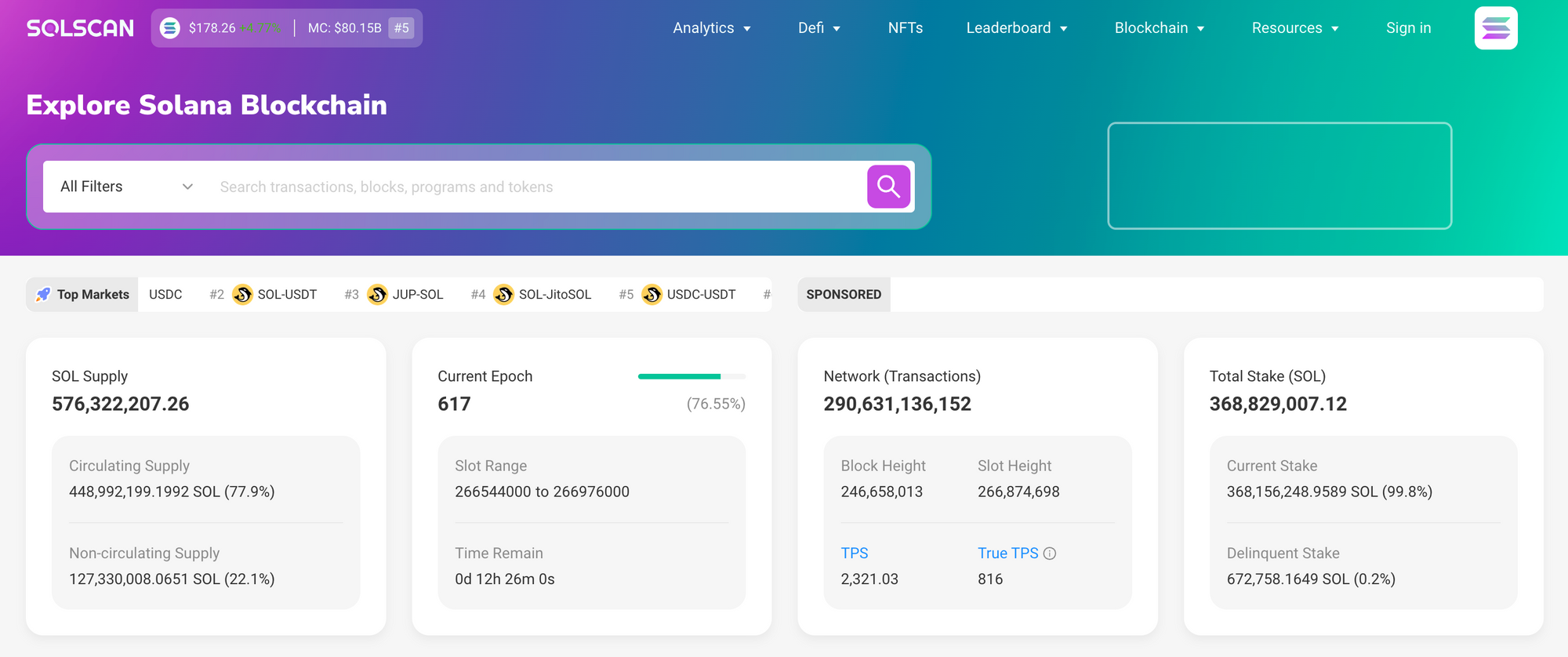
Here’s the thing. If you want quick verification of transfers or token mints, it’s my go-to tool. I’m biased, but the combination of speed, depth, and clean permalink sharing makes team communication easier. You can jump from a transaction to an associated token mint to the holder distribution charts, and then filter by time ranges or sort by amount to reveal winner addresses or pattern movers, which saves hours of manual tracing. For anyone exploring Solana activity start with the solscan explorer official site and then bookmark specific program pages for recurring monitoring, because that small habit prevents recurring manual searches and reduces missed signals.
Whoa, not perfect though. Privacy-minded users should remember that on-chain lookups expose address relationships publicly. Solscan makes those relationships clearer, for better or worse. On one hand, investigators and auditors appreciate transparent linkages and rich metadata; though actually, on the other hand, casual users may be surprised to find their wallet activity easily traceable if keys are reused across services. So, think about operational hygiene—use new addresses for different services, consider obfuscation techniques where legal and appropriate, and treat explorers as mirrors that reflect everything you broadcast on-chain.
Hmm, quick tips. Monitor transaction confirmations; it’s very very important to avoid relying on unconfirmed data. Use the export CSV feature when you need structured data for spreadsheets or audits. If you’re building tooling, dig into available APIs and rate limits, and prefer indexed endpoints rather than raw RPC calls when possible to increase reliability and reduce your own infra costs. Finally, keep an eye on new explorer features and community forks; the Solana ecosystem moves fast and explorers often add integrations that change workflow dynamics in meaningful ways, so stay curious.
Pretty accurate for finalized blocks, but you should verify confirmations. My gut says the explorer is trustworthy for most use cases, though edge cases happen with reorgs or RPC hiccups. On a technical level the data comes from nodes and indexers, so timing and indexing cadence matter. If you need forensic-grade certainty, cross-check multiple explorers and raw RPC responses before acting.
Yes for a lot of scenarios, especially when you need decoded instructions and inner logs. Initially I thought debuggers were the domain of local tools, but seeing program invocation traces in an explorer is surprisingly helpful. For deep debugging you still want local test validators and logs, though Solscan often speeds up the triage stage by pointing you toward the exact transaction and program call that caused trouble. So use it as a compass, not the only tool.


“Author of Swirling. Advocate for black women finding love across color lines. Creator of The Pink Pill.”


It’s a new year and with it, perhaps new incentive to finally pursue what you...
READ MORE